Start with a paid audit, not another vague discovery call
The audit is designed as a concrete first step: clear scope, senior review, written findings and a decision on whether to stabilize, migrate, rebuild, replace a vendor or move into a monthly Care & Growth plan.
When a Drupal Code Audit is the right first step
Use the audit when the next decision is too expensive to make on assumptions.
What we audit
The exact scope depends on your platform, but the review usually covers six Drupal-critical areas.
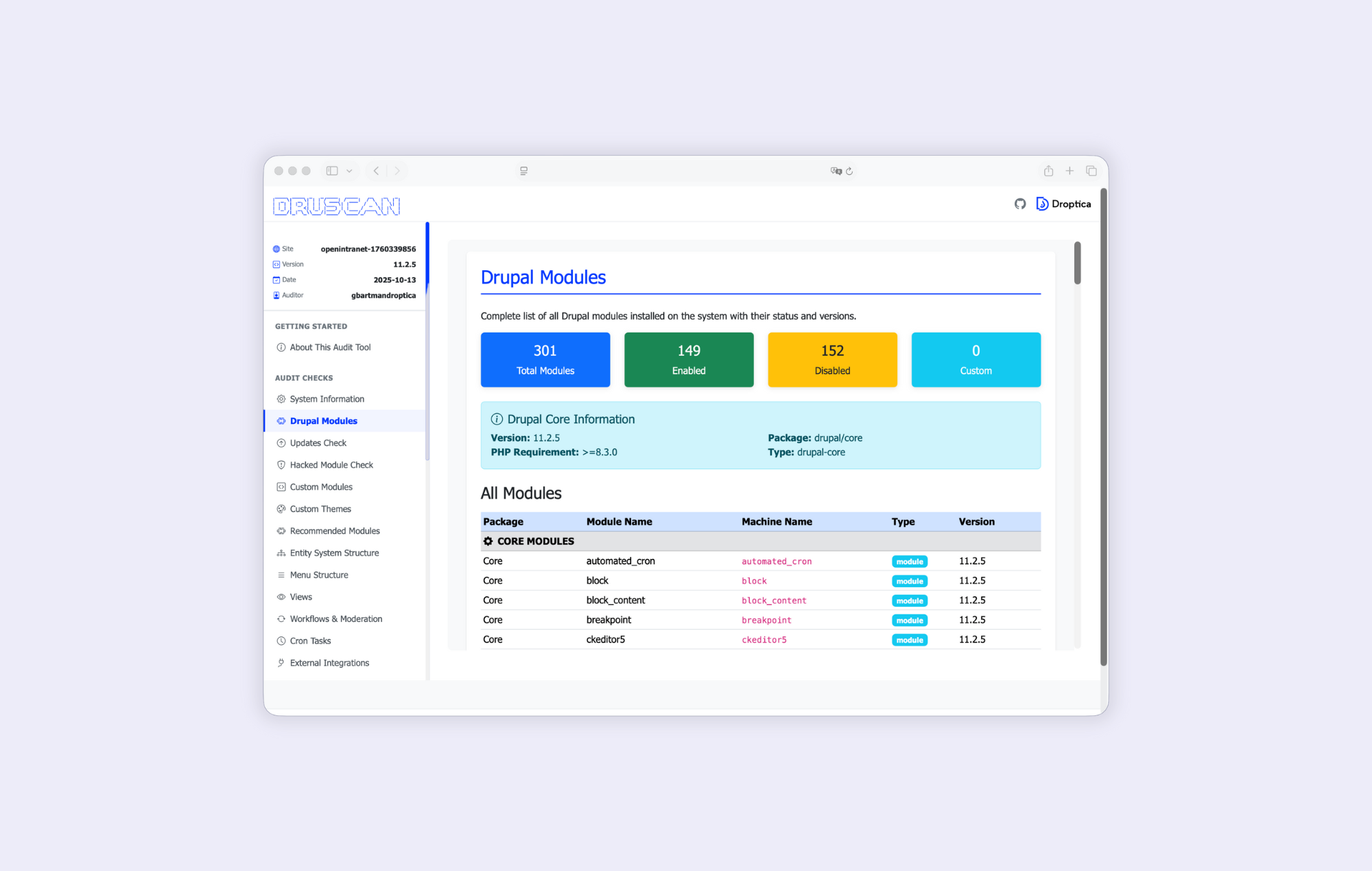
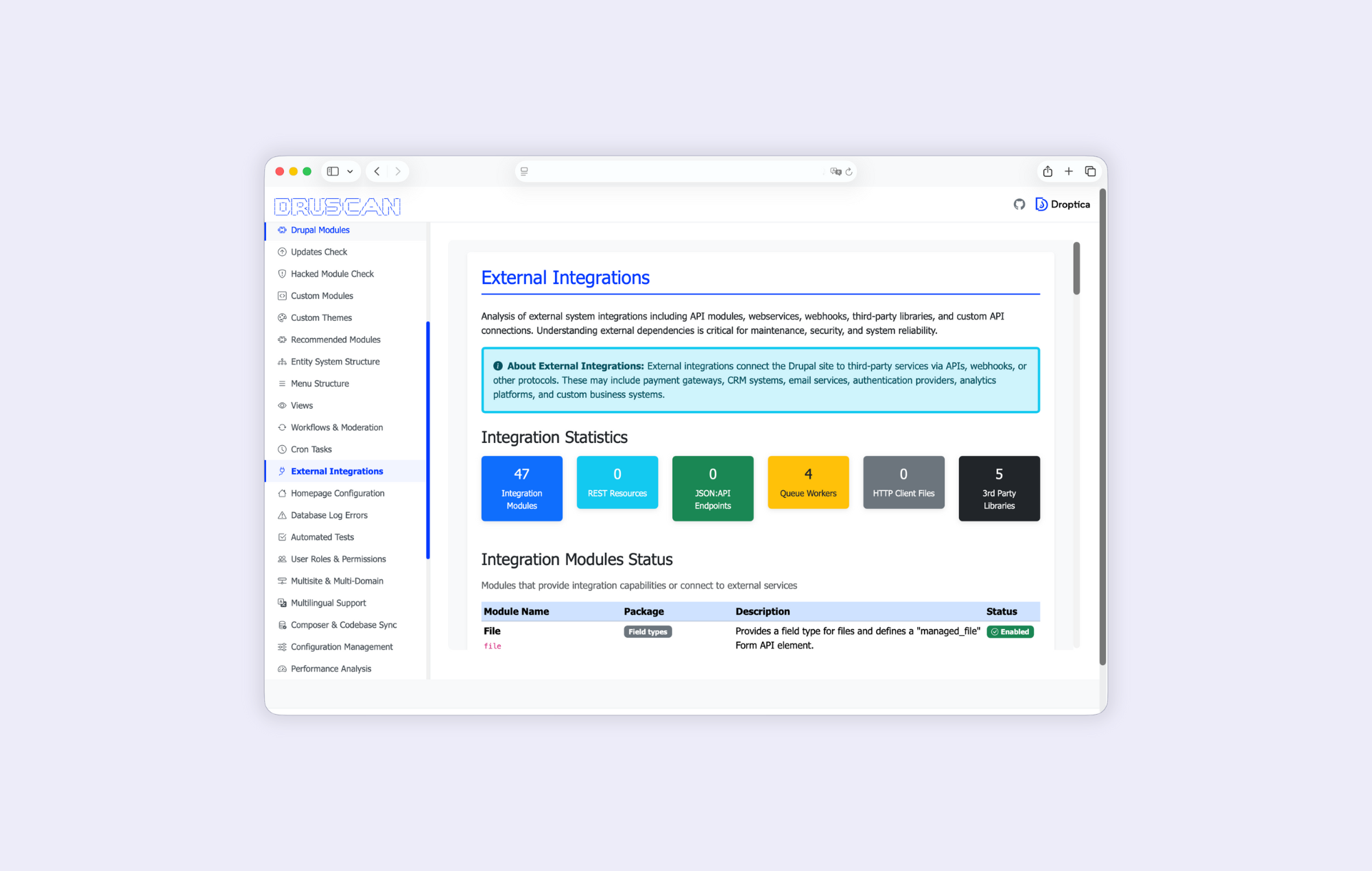
DruScan baseline, with consent
DruScan helps us collect a structured technical baseline from a code or site copy you intentionally provide for the audit.
- Drupal version, PHP version and module inventory
- Security update status and EOL exposure
- Configuration, content and performance signals
- Input for the senior review, not a final verdict
We do not position DruScan as a public scanner or a replacement for architectural judgment.
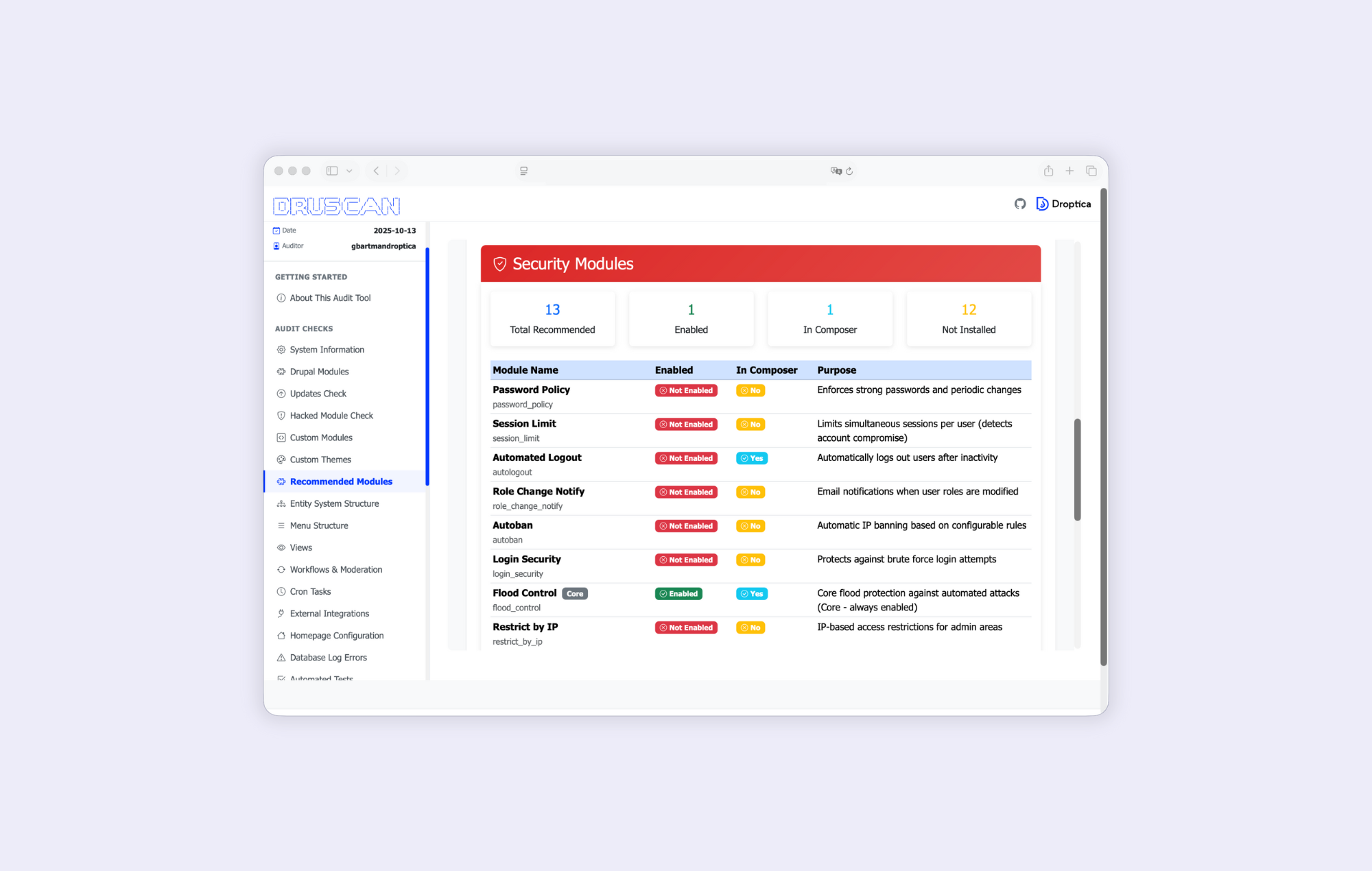
Senior architecture review
A senior Drupal architect reviews the baseline, checks custom code and turns findings into business decisions.
- What must be fixed immediately
- What can wait until the next quarter
- What should be accepted as risk
- Whether migration, rebuild or takeover is justified
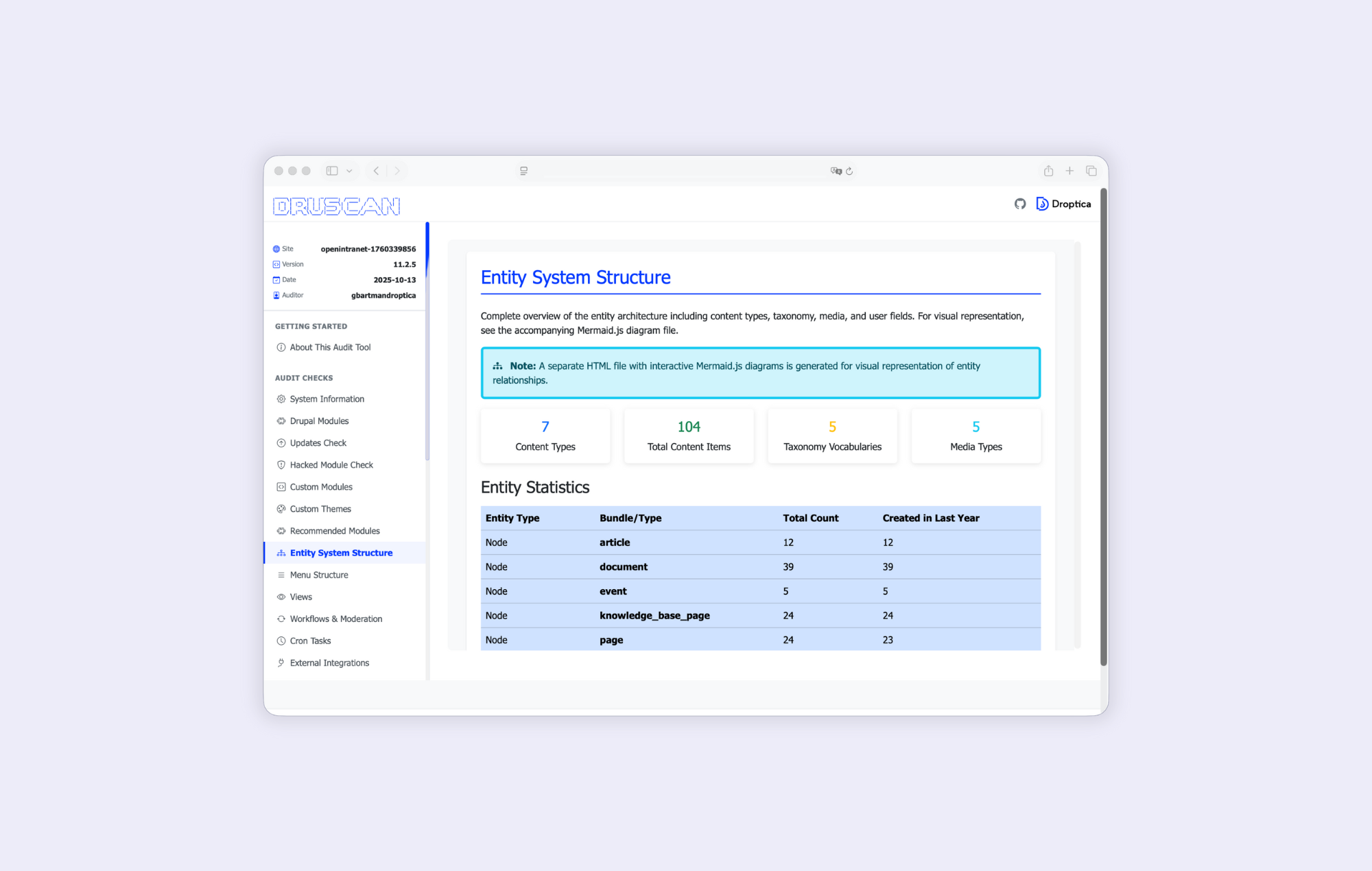
Security, access and operational risk
We look at the areas that most often create real operational exposure in Drupal platforms.
- Security advisories and outdated dependencies
- Role and permission risks
- Custom access logic and form handling
- Backups, monitoring and incident readiness
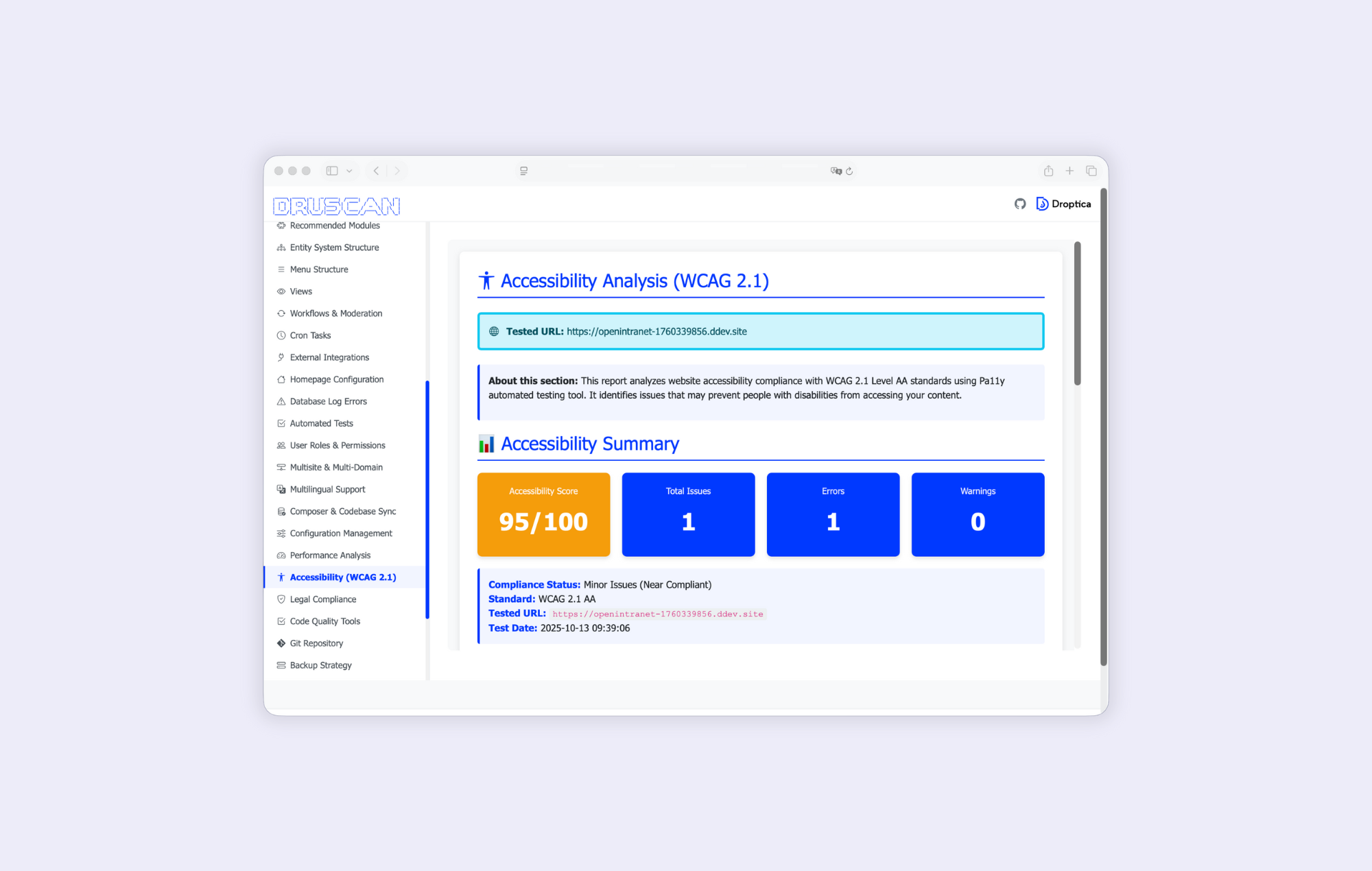
Performance, WCAG and technical SEO signals
Code health is not isolated from business outcomes. We include the quality signals that affect editors, users and organic growth.
- Cacheability and slow-query patterns
- Frontend implementation and Core Web Vitals risks
- Accessibility and structured content concerns
- Technical SEO blockers that belong in the platform backlog
Roadmap toward Care & Growth
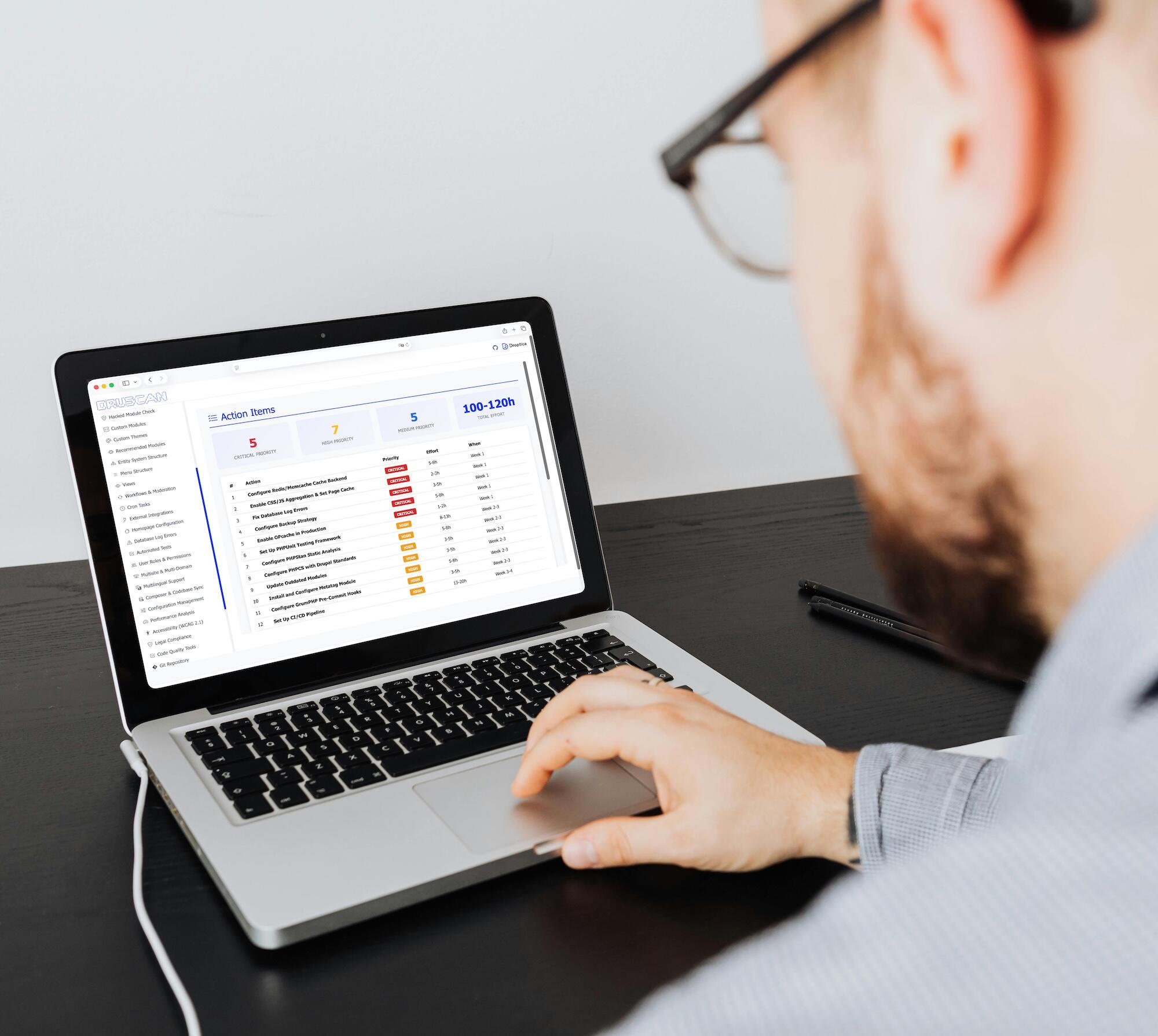
The audit should not end with a PDF. We use it to decide how the Drupal platform should be owned over the next year.
- 90-day stabilization plan
- Remediation effort ranges
- Support and development capacity recommendation
- Clear options: fix, migrate, rebuild or change vendor
Best fit for platforms where Drupal risk matters
The audit is most useful when Drupal is already important to revenue, service delivery, compliance, marketing operations or public communication.
How the audit works
1. Scoping. We confirm the platform shape, access model, risks and the business decision the audit must support.
2. Secure handover. We sign NDA when needed and agree how the code or site copy is shared. Secrets should not be included.
3. DruScan baseline. We collect structured technical data to speed up the review.
4. Senior review. A Drupal architect validates findings, checks custom code and translates risk into decisions.
5. Walkthrough. You get the report, priorities, effort ranges and a recommended 90-day and 12-month plan.
What you receive
The output is built for a decision meeting, not only for developers.
DruScan is the baseline. The audit is the decision.
Automated tooling can collect useful facts. It cannot decide which technical debt is acceptable, which architecture risk blocks growth, whether the current vendor relationship should be changed or how much monthly capacity your platform needs. That is why DruScan is part of the process, but the deliverable is a senior Drupal audit with a roadmap.
Drupal Code Audit FAQ
What clients usually ask before booking an audit
No. The audit is a paid, scoped engagement, but we do not publish a public price table because Drupal platforms differ in size, access model, integrations, compliance risk and potential monthly ownership. We confirm the commercial scope after an initial qualification call.
Most audits take about two weeks once access and scope are confirmed. Larger multisite, multilingual or integration-heavy platforms may need a broader scope.
Usually a code repository or prepared code/site copy, documentation, deployment context and a technical contact. DruScan is run only after you intentionally provide the audit copy. Secrets should not be included.
No. DruScan helps collect baseline data. The audit is the senior interpretation, risk assessment, prioritization and roadmap that follows.
Only if you ask us to. We can audit from the provided code and context, or join a controlled handover conversation when that helps reduce risk.
Yes. The roadmap is yours. You can use your own team, another agency or Droptica. If you choose Droptica, we can turn the audit into a 90-day stabilization plan and a monthly Care & Growth model.
Yes. EOL and upgrade readiness are common audit triggers. We check what blocks the upgrade, what can be stabilized first and whether migration or rebuild is more rational.
No. Drupal Code Audit focuses on code, architecture, security, operations and ownership risk. Drupal SEO Audit focuses on technical SEO, Core Web Vitals, content architecture and search visibility.