Intranet Content Ideas. What Content Types Can You Use on Your Platform?


Do you have an intranet, but your employees rarely use it? The problem often lies in the content you publish. An intranet is not just a bulletin board—it is a center for internal communication and building company culture. In this article, you will find 12 proven content ideas that will drive employee engagement, improve information flow, and make the platform a natural place to work.
In this article:
- Intranet content strategy – how to boost employee engagement?
- 1. Knowledge base
- 2. Employee handbook
- 3. Materials supporting the onboarding process
- 4. Company policies and processes
- 5. Training opportunities and materials
- 6. Company news content
- 7. Surveys
- 8. Job offers
- 9. Employee-generated content
- 10. Motivational content
- 11. Galleries and promotional videos
- 12. Information about employee benefits
- Engaging intranet content ideas – summary
Intranet content strategy – how to boost employee engagement?
Before you start publishing, define your strategy. Answer four key questions:
1. Who is your audience?
Office workers have different needs than production or remote workers. Tailor your intranet content to the context of your users' work.
2. What problems are you solving?
Are employees unable to find procedures? Do they feel disconnected from the company? Do they lack knowledge about benefits? Identify real needs, and don't publish just for the sake of adding content.
3. What content formats should you choose?
Different intranet users prefer different formats—some prefer to read, others to watch videos or listen to podcasts. That's why it's a good idea to mix content types.
4. How often should you publish?
Regularity is more important than quantity. It is better to add one good news item every week than to fill the intranet platform chaotically.
Principles of an effective content strategy:
- variety of content formats – texts, videos, infographics, podcasts,
- timeliness – remove outdated information,
- easy navigation – tags, categories, search engine,
- two-way communication – comments, questions, opinions,
- measuring results – track what employees read and what they ignore.
A well-planned strategy is the foundation of an effective company intranet.
1. Knowledge base
Providing knowledge is the basic function of a corporate intranet. Employees must have quick access to the information they need for their daily work – without searching through emails or asking colleagues.
Publish intranet content in various formats:
- Downloadable documents – procedures, templates, forms. The ideal format for people who prefer to print materials or take notes in the margins.
- Articles – short how-to texts, step-by-step instructions, best practices from projects.
- Visual content - infographics and presentations. Particularly effective for communicating complex processes or numerical data.
- Multimedia content – tutorials, training recordings, user manuals. Short videos (up to 5 minutes) are easier to digest than long text documents.
- Podcasts – interviews with experts, discussions about projects. You can listen to them while commuting to work or training.
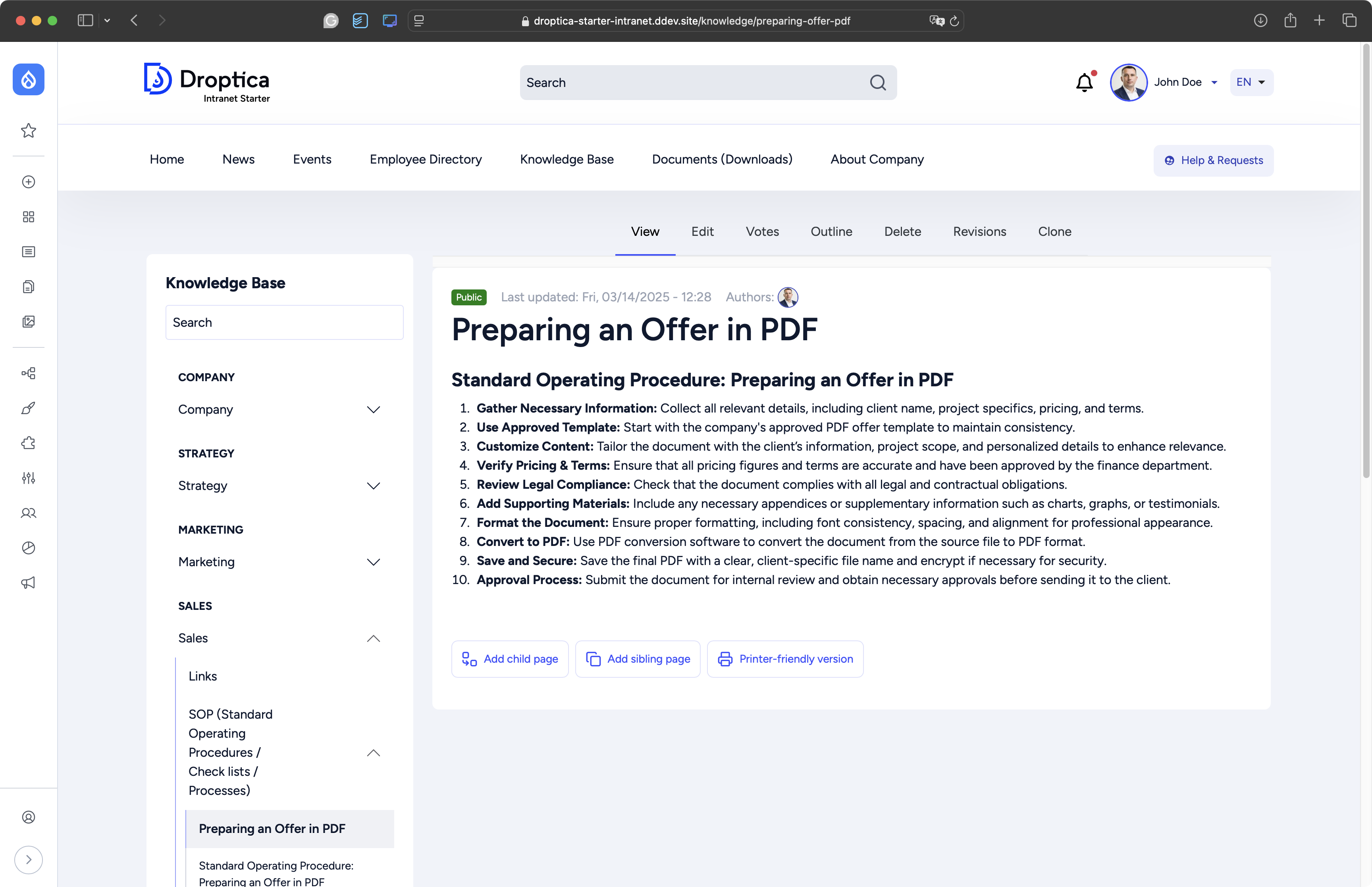
Knowledge base in the Open Intranet system.
How to organize it?
Tag all materials (#onboarding, #IT, #sales) and add a search engine. Employees don't have time to search – information must be at their fingertips. Update intranet content regularly and delete outdated documents to maintain a current and reliable database.
2. Employee handbook
An employee handbook is a comprehensive guide to the company – a document that anyone can refer to when they have questions about the company's values, rules, or organizational structure.
What should an employee handbook contain?
- The company's mission and values – why the company exists, what it stands for, and its goals. This is the foundation that helps employees understand the meaning of their work.
- History and organizational structure – where we came from, how we developed, how the company operates today. A structure diagram divided into departments and teams.
- Code of ethics – standards of behavior, anti-bullying policy, equal treatment rules. Clear guidelines create a safe working environment.
- Company culture – how we work on a daily basis, what our customs are (e.g., Friday meetings, shared lunches), and how we make decisions.
- Rights and obligations – basic legal information: working hours, holidays, remuneration rules, employee obligations.
Why is this important?
An employee handbook eliminates uncertainty, especially for new hires. Instead of asking dozens of times "how does it work here," employees have a single point of reference. Placing the handbook on the intranet site ensures that everyone has access to the latest version – no one is working from an outdated PDF from an email. You can easily update the content with every organizational change, and employees always see the latest version.
Read also: HR Intranet. How Can the Right System Support the Human Resources Department?
3. Materials supporting the onboarding process
The first days in a new job are challenging – new faces, systems, rules. Good onboarding materials help new hires quickly find their feet and feel part of the team.
What should onboarding materials include?
- A guide for the first days/weeks – a step-by-step implementation plan. What happens on the first day, what happens in the first week, what tasks need to be completed in the first month.
- Technical instructions – how to log into company systems, set up email, access tools (Slack, CRM, Jira). It is worth adding simple screenshots or short instructional videos here.
- Task checklists – what needs to be done: sign the contract, collect equipment, complete mandatory training (e.g., health and safety, GDPR).
- Contacts for key people – who is who: buddy (mentor), direct manager, IT support, HR department, project coordinator.
- FAQ for new employees – answers to the most frequently asked questions: how to request vacation time, when are paydays.
- Welcome video – a short recording from the CEO or HR team. A personal welcome creates a positive first impression.
Why is this important?
A well-prepared onboarding process reduces implementation time by up to 50% and increases new employee retention. The company intranet is the ideal platform for these materials – new hires can access everything in one place, available 24/7. They don't have to search for information in emails or ask colleagues about basic things.
4. Company policies and processes
Every company has its own procedures – from customer service to rules for using equipment. Clearly described processes eliminate chaos and ensure that everyone works according to the same standards.
What rules and processes are worth sharing?
- Health and safety and equipment operating instructions – essential in factories, warehouses, and workshops. Safety is a priority.
- Customer service scripts – communication standards in call centers, sales, and technical support. They contain information on what to say, how to respond to complaints, and what phrases to avoid.
- HR procedures – how to request vacation, business trips, and sick leave. How the employee benefits system works, and what to do when personal data changes.
- Project workflows – how projects run from start to finish. Who is responsible for what, what are the stages, and where to report progress.
- Security policies and GDPR – how to protect customer data, what you can and cannot do with confidential information.
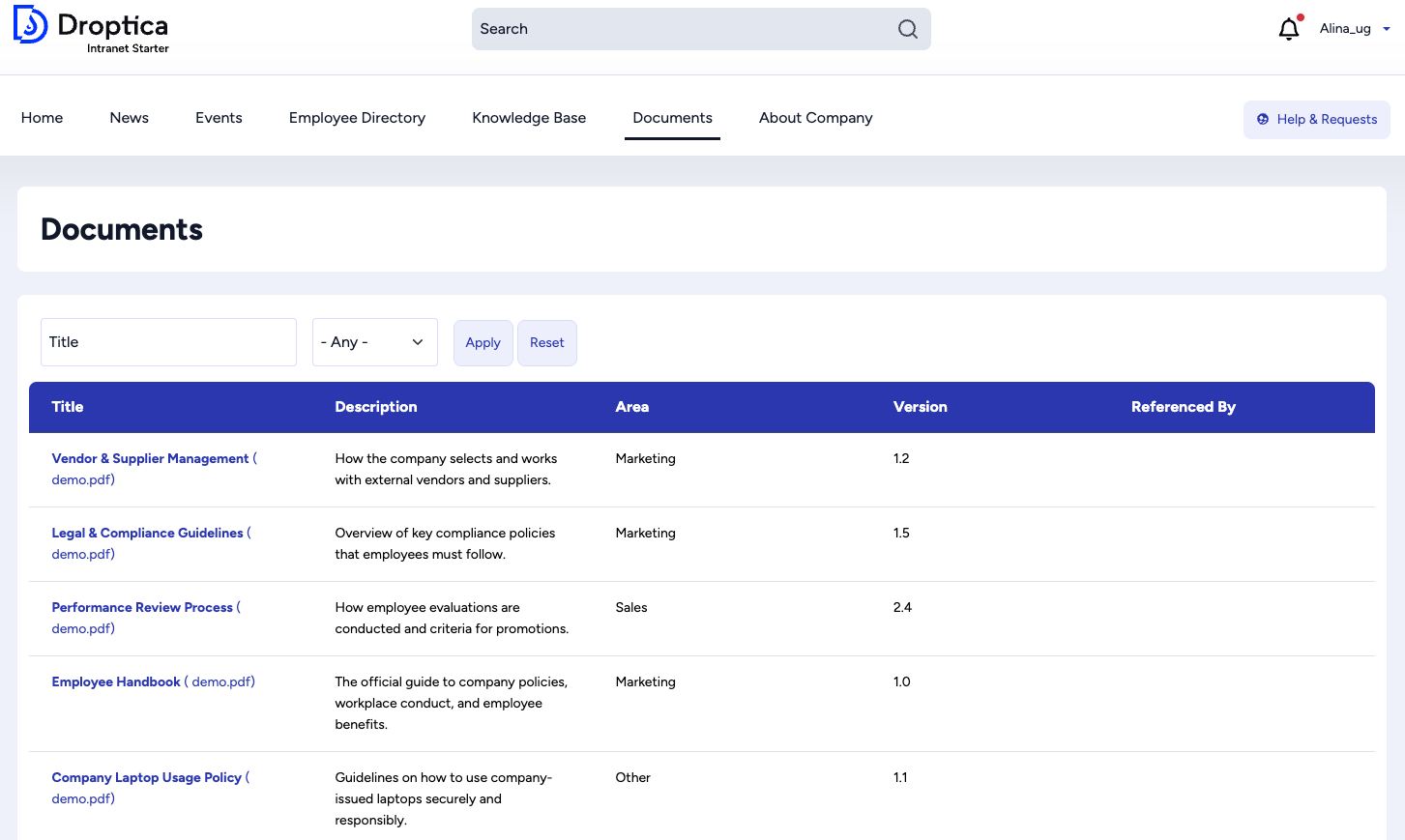
The Open Intranet platform makes it easy to publish and manage company documents.
In what form should you publish?
Adapt the format to the type of procedure. Simple rules can be a PDF document or an article. Complex processes are better presented as an interactive diagram or checklist. Video instructions work well for operating devices or systems.
5. Training opportunities and materials
Investing in employee development is an investment in the company's future. What can be published in the training section?
- Training catalog – a complete list of available internal and external training courses, with descriptions, dates, and cost information.
- Registration system – a simple form for reserving a place on a training course, without the need to send emails to the HR team.
- Post-training materials – recordings, presentations, certificates available for download. Participants can return to the content, and those who were absent can catch up on what they missed.
- Development paths – recommended training courses for different roles and levels: junior → mid → senior.
- Online course suggestions – links to valuable courses on Udemy, Coursera, or LinkedIn Learning.
- Training budget – transparent information on how much each employee has at their disposal annually for professional development.
Why is this important?
Centralizing training information in the corporate intranet facilitates development planning. Employees can view the available opportunities and select training courses tailored to their specific goals. The company saves time for the HR department, which previously had to coordinate registrations and distribute materials.
6. Company news content
Employees want to know what is happening in the entire company. Regular information builds transparency, increases engagement, and helps the team understand the context of their work.
What corporate news should be published?
- Financial and business results – revenue growth, signed contracts, and achieved goals. Employees want to know that the company is growing.
- Organizational changes – new positions, promotions, department restructuring. Transparency will eliminate rumors and uncertainty.
- Team and project successes – completed implementations, satisfied customers, and industry awards. Celebrate achievements and demonstrate that the work is meaningful.
- Industry news articles – market reports, trends, competition analysis. Help employees understand the business environment.
- Event coverage – conferences, trade shows, open days. Photos, videos, and summaries demonstrate that the company is actively engaged in the market.
How to publish?
Add short news items (3-5 sentences) with the option to expand on them. You can also send a weekly newsletter from the CEO or management board, as well as publish monthly summaries in the form of infographics. Regularity is key – it is better to write shorter intranet content every week than extensive, chaotic texts.
7. Surveys
Surveys are a two-way communication tool – they show employees that their opinion matters and provide the company with valuable information for decision-making.
What surveys should be conducted on the company intranet?
- Satisfaction and organizational climate surveys – how employees rate the atmosphere, management, and working conditions. Regular surveys (e.g., quarterly) allow you to respond quickly to problems.
- Training needs surveys – what employees want to learn, what skills they want to develop. Tailor your training offer to actual needs.
- Post-event surveys – feedback after training sessions, conferences, and company events.
- Opinion polls – quick questions about company initiatives, changes in benefits, and ideas for improvements. Short surveys (1-3 questions) have a higher response rate.
- Knowledge tests – after training on health and safety, GDPR, and safety procedures. This ensures that key information has been absorbed.
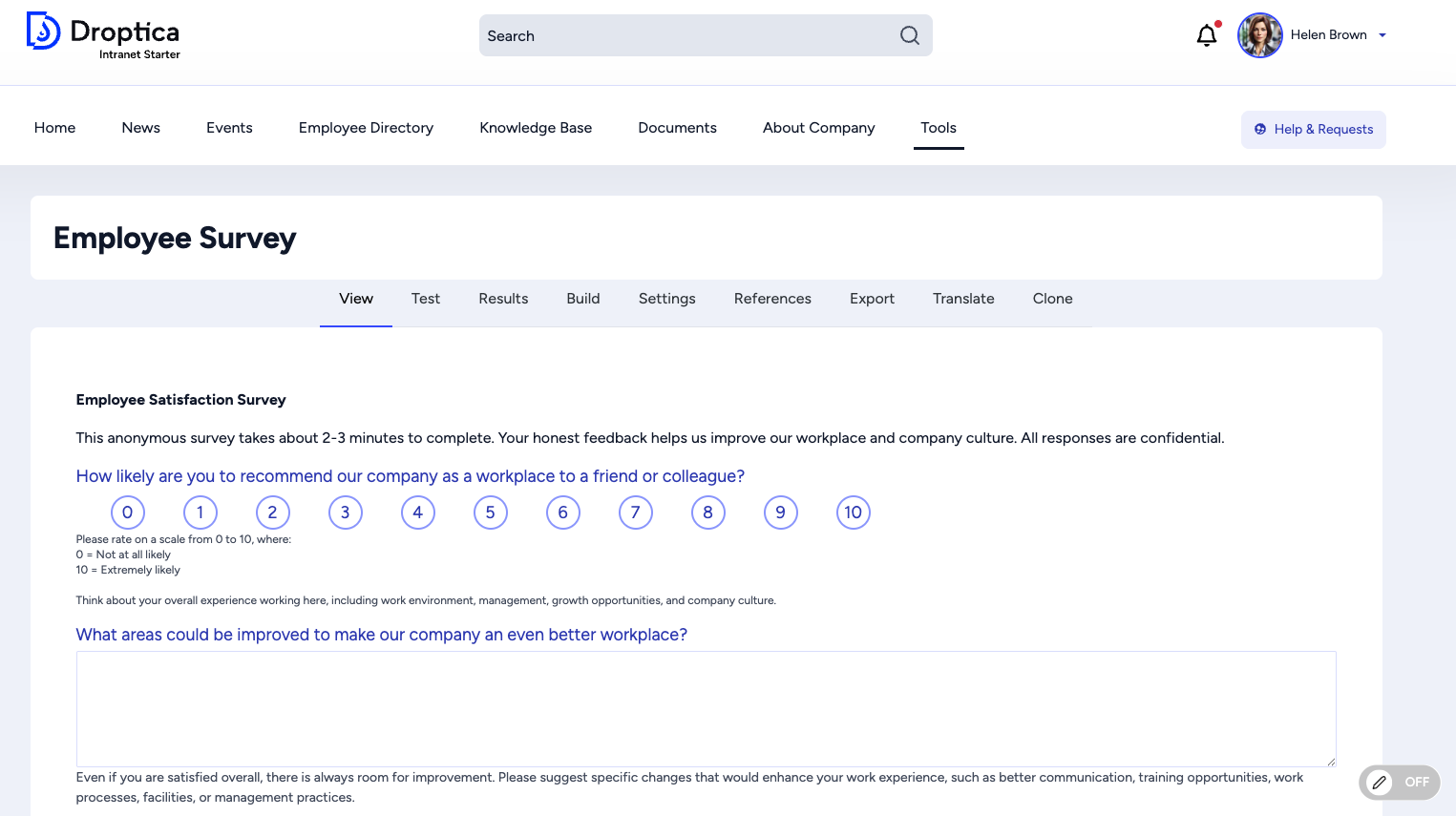
Employee satisfaction survey in the Open Intranet system.
How to do it right?
Always communicate the results of surveys and the actions taken in response. If employees see that their opinions lead to change, they are more willing to complete subsequent surveys. Without providing feedback, the organization may lose credibility.
Intranet surveys are easy to complete and can be analyzed quickly. They provide the company with data to make informed decisions and ensure employees feel that their voice matters.
8. Job offers
Internal job offers provide current employees with an opportunity to develop their careers and offer a cost-saving benefit for the company – internal recruitment is often more cost-effective than external recruitment.
What to publish in the job offers section?
- Open positions in the company – current vacancies with a job description, requirements, and responsibilities. Employees should be the first to know about new opportunities.
- Opportunities for promotion and career changes – not only new positions, but also information about possible transfers between departments or projects.
- Employee referral program – rules and bonuses for successfully referring a candidate. Employees know the best specialists in the industry.
- Success stories – stories of people who have developed their careers within the company. Inspiring examples motivate others.
How to organize it?
A simple application system – employees already have a profile in the system, so all it takes is one click. Clear promotion criteria and a transparent recruitment process eliminate uncertainty. Alerts about new offers matched to competencies increase engagement.
Publishing offers on the company intranet shows that the organization is committed to the development of its current employees. This increases retention – people stay because they see prospects. And the company gains motivated candidates who are already familiar with the company culture.
9. Employee-generated content
You don't have to create all the intranet content yourself. Employees have knowledge, experience, and ideas to share. What kind of content can employees create?
- Project reports – teams describe how the project went, what the challenges were, and what worked. Other teams learn from their experiences.
- Tips and tricks from experts – "How to set up a VPN in 3 minutes," "5 keyboard shortcuts in our CRM system." Practical knowledge from people who know the tools inside out.
- Project documentation – well-written documentation can serve as a template for other teams.
- Discussion forum – knowledge sharing, technical questions, peer support. Employees help each other without involving a manager.
- Employee blog – hobbies, passions, interesting facts that help employees get to know each other better.
How to organize it?
Establish simple rules for publication, including who can publish, how to tag content, and who will moderate. Encourage employees to share knowledge, but don't force it – the most engaging content comes naturally.
Intranet content created by employees has authenticity and practical value. People are more likely to read advice from a colleague than formal instructions. And the company intranet becomes a living platform, not just a top-down communication channel.
10. Motivational content
The intranet is not only a work tool, but also a solution that supports employee well-being and motivates them every day.
What motivational intranet content is worth publishing?
- Advice on mental health and work-life balance – how to cope with stress, maintain a balance between work and private life, and recognize burnout.
- Motivational articles – inspiring stories, thoughts on development, advice on efficiency. They don't have to be long – a short quote or tip of the day also works.
- Thanks for the good results – public employee recognition posts for people who have achieved their goals, completed a difficult project, or helped the company.
- Kudos – a system of public appreciation for colleagues. Anyone can add a thank you to their colleague.
- Awards for success – employee of the month, best team of the quarter, sales record.
Where to get content?
The communications team doesn't have to create everything from scratch. It can link to valuable external articles, wellbeing reports, or development podcasts. Sharing valuable content is key.
Motivational intranet content demonstrates that the company values its employees as individuals, not just as resources. This builds loyalty and makes people more likely to return to the intranet – not only for work-related information, but also for inspiration.
11. Galleries and promotional videos
Photos and videos build an emotional connection with the company – they show that there are real people behind the brand and that the company is more than just a desk job.
What to publish?
- Photos from business trips and conferences – the team at trade fairs, the company stand, and meetings with customers. Employees can see that the company is actively engaged in the market.
- Galleries from internal events – lunches, team-building meetings, company picnics, holiday parties. Such materials build a sense of community.
- Videos promoting initiatives – videos about a new CSR project, mentoring program, or investment in development.
- Employee interviews – "Meet the team": who you are, what you do, what your passions are. This is especially important in companies where hybrid setups and remote teams mean people rarely meet.
- Behind the scenes – what a day looks like in the warehouse, in the IT department, in the sales office. Help employees understand what other teams do.
How to do it right?
Authentic photos work better than staged sessions. Mobile devices are enough – spontaneity is important. Ask for permission before publishing photos of specific people.
In the era of hybrid and remote work, people need a sense of belonging. Galleries and videos remind them that they are part of something bigger. It is also an internal employer branding tool—you show why it is worth working for your company.
12. Information about employee benefits
The company offers benefits, but do employees know how to use them? Without clear instructions, many benefits remain unused.
What to include in the benefits section?
- Benefits catalog – a complete list: sports card, private medical care, training subsidies, prepaid cards, along with a description of how to activate and use them.
- Vacation calculator and schedule – how many vacation days the employee has, how many they have already used, and when others in the team are planning their vacations. Transparency makes planning easier.
- Support programs – psychological assistance, legal advice, support for parents. Clearly communicate that the company offers help in difficult situations.
- Sports and team-building initiatives – sign up for yoga classes, company runs, and trips to the cinema.
- Contact details for key people – who is responsible for benefits in the HR department, who to report a problem with a sports card to, and who coordinates team-building events.
Why is this important?
Well-described benefits on the company intranet increase their use. Employees appreciate what they actually use – and they cannot use it if they do not know how. The intranet solution eliminates barriers and ensures that benefits are not just a clause in the contract.
Engaging intranet content ideas – summary
An effective company intranet requires a well-thought-out content strategy. Publish a variety of materials – from knowledge bases and corporate policies to motivational and social intranet content. Adapt formats (text, video, podcast) to employee preferences. Keep the content up to date and encourage your team to co-create the platform. Well-planned content increases intranet engagement, improves workplace communication, and builds a strong organizational culture.
Do you need a modern intranet solution? Our specialists will help you plan, implement, and develop an intranet tailored to your company's needs.
***
Updated article dated 17/11/2023