Drupal 7 Migration and EOL Readiness
Drupal 7 is past end of life. We start with a readiness audit, then help you decide whether to migrate 1:1, migrate with cleanup, or rebuild the platform on Drupal 11 with a Care & Growth plan after launch.
Drupal EOL is a business risk, not only a version problem
Drupal 7 reached end of life on 5 January 2025. Drupal 8 and 9 are also past EOL, and Drupal 10 reaches EOL on 9 December 2026. For an active business, university or public-sector platform, the question is no longer whether an upgrade is needed. The question is which migration path protects security, content operations, SEO, accessibility and future roadmap ownership.
Droptica uses the first audit to map risk, scope, data, integrations, custom code and decision options. The result is a practical migration plan instead of a blind estimate.
Choose the right Drupal migration path
A migration should match the current risk, budget and business deadline. We usually compare three paths before recommending the roadmap.
What we check before a Drupal migration estimate
A serious migration estimate needs more than the current Drupal version. We review custom modules, contrib module status, PHP and hosting constraints, content model, media, languages, redirects, search, forms, integrations, editor workflows, accessibility obligations and deployment process. This prevents the migration from becoming a technical copy of old problems.

Paid support for Drupal 7 after official support ends
While some companies offer commercial support for Drupal 7 after January 2025, you should be aware that the number of such providers will be limited, driving up the cost of their Drupal migration services. Additionally, paid support often doesn’t cover issues related to outdated versions of PHP and libraries that Drupal 7 relies on. As a result, maintaining your website on this version could lead to significant long-term costs.

Costs and complexity of migration
Migration might seem costly and time-consuming, especially for businesses with custom modules or large databases. However, investing in migration protects you from higher costs due to situations that may arise in the future - such as repairs after hacking attempts, increasing compatibility issues, or rising costs of maintaining outdated technologies.
Once you’ve migrated to the latest version of Drupal, you won’t need to undergo another full migration. From version 8 onward, Drupal allows seamless updates without the need to migrate data, making system maintenance cheaper over the years. Each new version of Drupal brings free features and improvements. At Droptica, we manage numerous systems that we've successfully upgraded from Drupal 8 to versions 9, 10, and beyond - some of which we’ve been maintaining this way since 2016.
Migration costs should be considered in the context of the total cost of ownership (TCO). With proper updates, Drupal can run stably for five years or more, significantly reducing long-term maintenance costs.
Migrating to another CMS or staying on Drupal?
Some businesses may consider moving to a different CMS, thinking it might be simpler or cheaper. However, migrating to another CMS can be more complicated than staying on Drupal - it requires a complete rebuild of your content, structure, and design. Drupal remains one of the most powerful platforms, especially for content-rich websites with complex structures. Migrating to the newest version of Drupal ensures long-term stability and growth.
There’s often a temptation to migrate to WordPress, but it’s technologically outdated. WordPress uses structured code, which can make it difficult to find developers willing to maintain complex, critical systems on the platform. Additionally, WordPress has a less user-friendly admin panel compared to what Drupal offers from version 11 onward. Many users who previously worked with WordPress confirm that managing the latest version of Drupal is much more convenient and intuitive.
It’s hard to find another system that is as technologically refined, developed for over 20 years, and backed by a large open-source community (such as Drupal community) creating thousands of modules. Drupal is user-friendly for editors, flexible enough to adapt to business processes, and ensures long-term reliability, unlike many frameworks and systems that have disappeared in recent years. While you could build a custom system tailored to your company’s needs, the costs would be significantly higher than with Drupal.

You have a system that doesn’t require content updates or new features
If your website is an archival system that needs to remain online but no longer requires content updates (e.g., past conference editions or archived projects), we recommend migrating to static HTML. In this case, the website will still be accessible to users, but its maintenance will be cheaper and more secure, as static sites aren’t vulnerable to attacks like dynamic systems without security updates.
However, if your website requires further development or is part of an active strategy, migrating to the latest version of Drupal will not only provide the necessary security but also make future management and development easier when needed.
Delaying migration - a risky move
Many website owners may think they can postpone migration for later. However, each month of delay increases the risk of technical issues, cyberattacks, and other threats. Additionally, the longer you wait, the more complex and costly migration will become, as the technologies supporting your web page become even more outdated.
It’s also important to remember that the number of companies specializing in professional Drupal migrations is limited. As January 2025 approaches and Drupal 7 loses support, these companies will become increasingly booked. Eventually, even if you decide to migrate, you might have to wait for an available slot, making it impossible to complete the migration before the support ends. Therefore, it’s essential to act now, avoiding time pressure and the risk of being left without support at a critical moment.
What the migration readiness audit produces
The audit gives both business and technical teams a shared migration decision.
1. Risk and scope map
We identify EOL exposure, security gaps, custom-code risk, integration dependencies, content volume, SEO risk, WCAG needs and hosting constraints.
2. Migration roadmap
You get a recommended path, phased backlog, rough effort ranges and a post-launch Care & Growth model so the new Drupal platform does not stagnate again.
These two tools - the script and the checklist - allow for a seamless migration process and ensure that the new version of your website is fully tailored to your business needs.
Drupal 7 / EOL migration process
The sequence keeps the decision controlled before development starts.

Readiness audit. We review code, architecture, content, redirects, integrations, hosting, security and operational risk.

Migration decision. We compare 1:1 migration, migration with cleanup, redesign, rebuild or phased modernization.

Scope and roadmap. We prepare priorities, dependencies, effort ranges, launch risks and the first 90 days after migration.

Implementation. We migrate content and configuration, rebuild incompatible code and update Drupal, PHP, modules and deployment tooling.

SEO, WCAG and performance cleanup. We protect redirects, metadata, Core Web Vitals, accessibility basics and editor workflows.

Testing and release. We test critical user journeys, forms, integrations, editors, caching and fallback plans before launch.

Stabilization. We monitor production, fix post-launch issues and document the new operating model.

Care & Growth. We move from project delivery into monthly Drupal ownership, updates and roadmap improvements.
What affects Drupal migration cost
We do not recommend choosing a migration path from a public price table. A safer estimate starts with risk, access and scope.
Each project is priced individually depending on the specifics of the site and the client’s expectations.
What you gain by choosing a Drupal 7 migration with Droptica
Effective Drupal migration from A to Z
- Results tailored to your goals: Whether you want a quick and simple migration or plan to introduce major changes during the process, we adapt our work to meet your specific objectives.
- Comprehensive services: Beyond migration, we can redesign your website, optimize hosting, and add automation or integrations to ensure your website operates more efficiently.
- Recommendations for improvements: Based on our analysis, we provide suggestions for enhancements that can improve your site's performance, SEO, and user experience.
- Team training: After the migration, we offer training to your content team so they can easily manage the new Drupal version and its features.

Fast Drupal migration
- Efficient analysis: With our specialized tools, we can quickly conduct a thorough analysis of your Drupal 7 website, speeding up the migration.
- Prepared checklists: We have a set of ready-made recommendations and checklists to help quickly define the scope of work and implement the best solutions.
- Ready to act: With a large team of developers, we can begin the migration project immediately, without delays.

Minimal effort on your side
- Complete deployment: We take care of the entire deployment process, handling all the technical aspects of getting your site live, so you don't have to worry about it.
- No downtime: We perform seamless migration in a way that minimizes or eliminates downtime, ensuring that your site remains fully operational throughout the process.
***
By choosing our migration service, you can rest assured that your website will be secure, optimized, and future-ready, with us handling everything from analysis to migration, deployment, and team training.
Why you can trust us
Experience: With over 10 years of experience in Drupal migrations. Our work on past projects has given us technical skills, tool knowledge, and solutions to recurring problems that we can apply directly to your website migration.
Certified expertise: As a "Drupal Certified Partner," our skills and service quality are recognized within the Drupal community.
Highly qualified team: Our team includes dozens of developers with Drupal certifications, guaranteeing a solid conceptual and practical approach to migration work.
What to expect from a senior Drupal migration partner
Examples of our migrations – from simple to complex

Simple Drupal migration:
information portal
In one of our projects, we completed a successful Drupal migration of a simple information portal from Drupal 7 to a newer version.
- The migration included 24 content types and 1,700 files and took 220 work hours.
- The project focused on transferring content without changing the functionality or design, allowing for a quick and efficient migration.

Large Drupal migration:
advanced business portal
In a more advanced project, we migrated an extensive business portal from Drupal 7 to Drupal 10, which required handling a large amount of data:
- The migration involved 26 content types, 872,000 nodes, 8,500 users, 191,000 files (~110GB), and 101 custom modules, which were optimized and consolidated into 44 main modules and 59 submodules.
- The data migration took ~35 hours, but the entire project required advanced performance optimization and processing of large data sets.
- Key challenges included processing and personalizing vast amounts of data, generating reports, and implementing efficient caching.
These two examples demonstrate the extremes – from simple, fast migrations to highly complex projects. As you can see, we can handle both small migrations and comprehensive, multi-layered deployments, tailored to each client's specific needs.
MSDynamicsWorld (MSDW) - Case Study
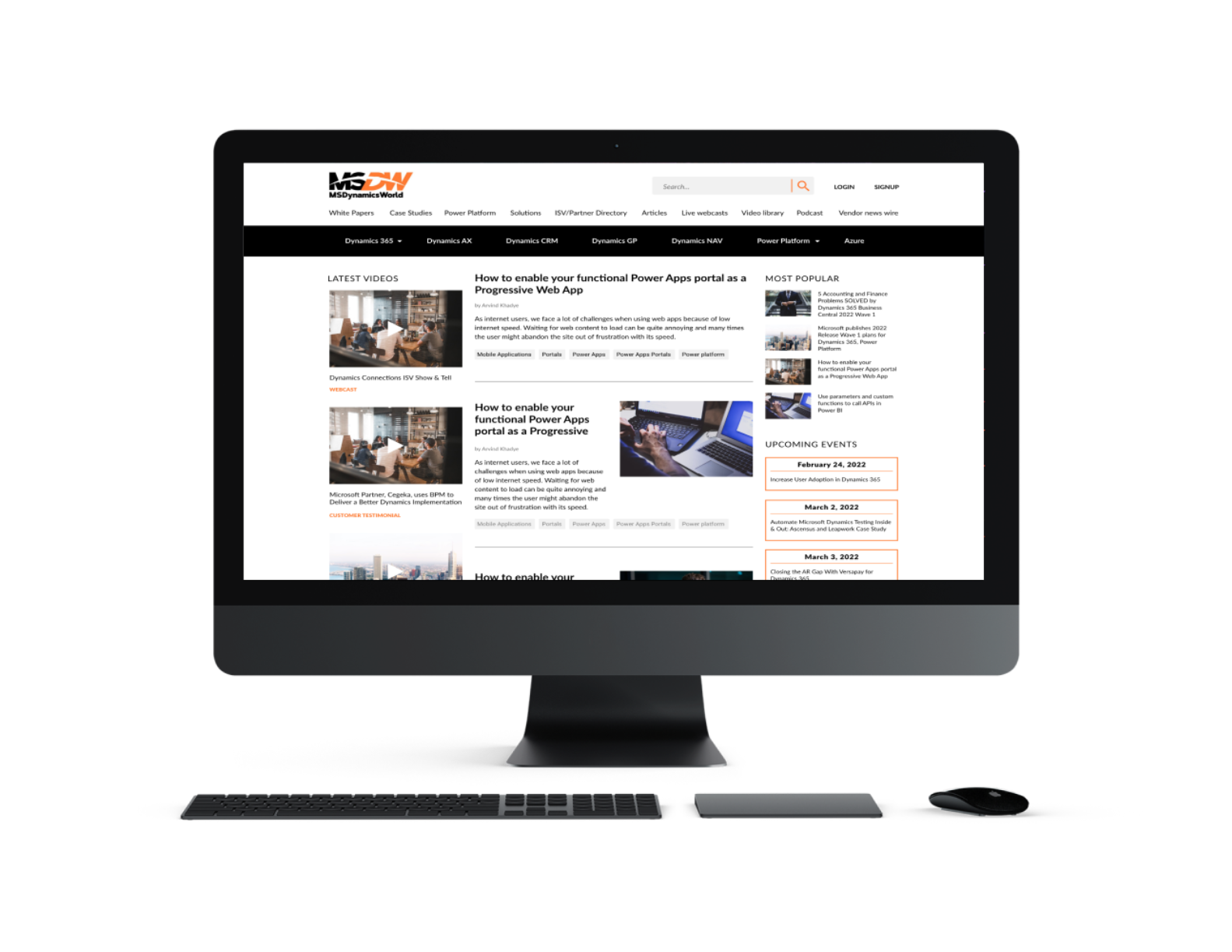
Migration of the MSDW news platform from Drupal 7 to Drupal 10 with a redesign and new features.
MSDynamicsWorld is a leading platform for technology content for Microsoft Dynamics professionals. It offers news, expert insights, case studies, and more. MSDW needed a modern, user-friendly design and a system update.
At Droptica, we migrated the website from Drupal 7 to Drupal 10, preserving all data and functionality. We added features like a layout builder for content customization, advanced search with SOLR, and an improved lead collection system, resulting in a faster, more efficient web page.
Read our articles about migrating websites
Check our articles with technical experts’ tips on Drupal migration and updates.





Watch Droptica Webinar: The Future After Drupal 7
Frequently Asked Questions (FAQs)
If certain modules are not compatible, we’ll suggest alternative solutions. This could be using another module with similar functionality or rewriting the existing module for the latest version of Drupal based on the Drupal 7 code. Each case is evaluated individually to find the most optimal solution.
During the migration, we’ll transfer the entire URL structure (URL aliases), page titles, and header tag structure (H1, H2, H3...). If your website has a sitemap, robots.txt, or other SEO-related features, we’ll also migrate those. We assess every SEO element during the analysis stage to ensure full compliance and to maintain your website’s search engine rankings.
After the migration, we enter a stabilization phase during which we monitor the system's performance. If any issues arise, we promptly fix them. Following the stabilization phase, we offer support packages, which include regular Drupal updates to newer versions and ongoing enhancements and optimizations to ensure long-term stability.