Blog /Technology

Building multifunctional websites and web applications is hardly an easy task. We support ourselves in this process with various programming languages and tools.

We are the largest and best-known company dealing with creating and supporting Drupal-based websites in Poland. Our areas of expertise also include Symfony, PHP, ReactJS and front-end development. In our endeavours, we also use a variety of other software solutions, such as PHPStorm, Jenkins and Docker.

We are happy to share our experiences, describing the process of work on building and developing websites and applications at Droptica. Thanks to SCRUM and the right tools such as Slack and Jira, we ensure seamless communication between the team and the client. We systematically improve or change the software we use in order to automate repetitive actions and speed up the development work.

You can learn more about the ins and outs of our work thanks to our extensive blog articles, or you can find out what benefits we can offer you thanks to our Case Studies.
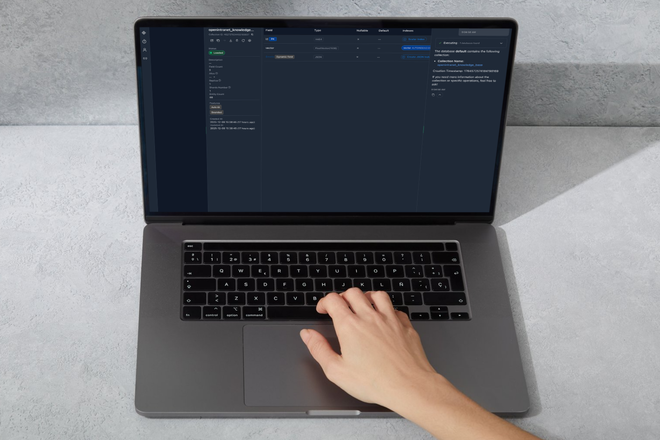
Attu is a powerful tool that greatly simplifies working with the Milvus vector database. Instead of writing Python code or using the API, you can manage collections, search for vectors, and monitor the system using an intuitive graphical interface. Thanks to Attu, working with Milvus becomes accessible not only to experienced developers, but also to data analysts and AI project managers.

Your AI chatbot works perfectly — it retrieves relevant documents, grades their quality, and generates accurate answers. But your monthly OpenAI bill shows $3,000, and when you analyze the logs, a disturbing pattern emerges: 30% of queries are simple questions like "What are you?" or "Hello" that trigger your entire expensive RAG pipeline. Each "Hi" costs $0.05 and takes 25 seconds to process a full vector search, document grading, and LLM generation for a greeting.

Your marketing team just published an important policy update. Two hours later, a user asks your AI chatbot about the new policy, and it confidently explains the old version—completely unaware that anything changed. The user, confused by the discrepancy with what they read on the website, opens a support ticket asking why the chatbot is "broken." Your team explains that the chatbot needs manual re-indexing, which happens nightly. The user's trust in your AI system drops significantly.

You're starting a new RAG project and face a decision that will shape your next 6-12 months: use a framework like LangChain, or build directly with the OpenAI API? The internet offers conflicting advice. X’s threads call LangChain "overkill" and "too much abstraction." Blog posts praise its mature patterns and ecosystem. Your team splits between "let's move fast with the framework" and "we should control our own code."

It starts like this: a user types, “How do I reset my password?” and waits… 25 seconds… 30 seconds… before giving up and emailing support. Behind the scenes, your AI chatbot does have the right answer — but it’s too slow, too costly, and users are walking away. The latest API bill? $5,000, mostly for answering the same dozen questions again and again.

Your AI chatbot may respond quickly, but are its answers correct? Many organizations implementing RAG (Retrieval-Augmented Generation) chatbots discover a frustrating truth: semantic similarity doesn't equal relevance. For example, a user may ask about "implementing zero-trust security architecture in hybrid cloud environments," and the system confidently returns articles about "cloud security," but they discuss basic firewall rules instead of zero-trust principles.

Protecting your website, web application, or CMS system from cyber attacks is critical to maintaining trust and functionality. Do you know how to secure it effectively? Follow our checklist of essential website security best practices in this blog post, and if you're using Drupal, you can apply them all in just 30 seconds with our recipe.

Our previous article on AI terms introduced you to the basic dictionary. In this part, we'll dive into more specialized phrases that will help you understand the technical discourse and enable you to discuss AI systems with more tech-oriented people. You'll also find some explanations of the inner workings of existing AI solutions such as ChatGPT, Stable Diffusion, HuggingFace, etc.

After the „AI revolution of 2022,” there is one simple conclusion – AI isn’t a fad that will go away anytime soon, but it will stay with us for some time. This spawned new positions within the industry and a lot of new phrases. There are many terms when discussing AI. Some of them are self-explanatory, and some can be confusing and unclear. Hopefully, after reading our articles on this topic, you won’t be surprised when someone throws this new terminology at you.

Now that there is no way in the world to perform without the Internet, having a website for your business is a total must. Unmonitored and left to its own devices, however, it can do more harm than good. In this article, we'll outline what dangers your web page faces if you forget to monitor it.

MG 1202 Blur

Need a team of Drupal and PHP web development experts?